A politician who promises more jobs has as much credibility with me as a politician who promises more sunny days. When it comes to jobs, politicians can either create more government jobs -- something they never brag about -- or interfere with the market's creation of private sector jobs.
Wednesday, September 15
The Only Way to Create Jobs
Outer Life writes about the only way to create jobs:


Innumerates II
Alex Tabarrok cites research to the effect that the minimum wage is not a good thing
Alex Tabarrok also links to Robert Musil's discussion of a New York Times' front page weeper full of meaningless numbers and touching anecdotes:
...one of the best ways to get a high-paying job is to get a low-paying job and work your way up. The minimum wage can put the least employable out of work and have permanent negative effects when training and work skills not acquired in youth are difficult to accumulate later on.Democrats and unions seem to worry more about trying to help adult minimum wage workers, who are a minority, right? And if one tries to oppose such counterproductive help, the left seems to think one is not being kind enough. It's the feeling that counts, not the numbers.
...teenagers who grow up in states with a minimum wage that is significantly and consistently higher than the federal minimum have lower earnings and work less a decade or more later when those workers are in their late twenties. The negative effects are larger for blacks, for whom the minimum wage tends to be more binding.
Alex Tabarrok also links to Robert Musil's discussion of a New York Times' front page weeper full of meaningless numbers and touching anecdotes:
..a New York Times survey comprising scores of detailed interviews exploring the families' [of September 11 World Trade Center victims] emotional, physical and spiritual status. That survey found lives colored by continuing pain. Almost half still have a hard time getting a good night's sleep. A few said they no longer flew on airplanes. About a third have changed jobs or quit. About one in five have moved since 2001, and a fifth of those who still live where they did on Sept. 11 would move if they could. Very few who lost a spouse have remarried.Musil provides a lesson in statistical thinking.
Tuesday, September 14
Innumerates
Ruling Class War by David Brooks:
There are two sorts of people in the information-age elite, spreadsheet people and paragraph people. Spreadsheet people work with numbers, wear loafers and support Republicans. Paragraph people work with prose, don't shine their shoes as often as they should and back Democrats.Then he comes up with an idiotic theory to explain it. As for myself, according to my "prosaic" background as a paragraph person I'd be expected to back the Democrats. However, I'm fond of humbers. My feeling is that a lot of Democrats are innumerate, and are unwilling or unable to understand explanations involving numbers. Of course, Bush seems to be innumerate as well. There goes that explanation.
C.E.O.'s are classic spreadsheet people. According to a sample gathered by PoliticalMoneyLine in July, the number of C.E.O.'s donating funds to Bush's campaign is five times the number donating to Kerry's.
Professors, on the other hand, are classic paragraph people and lean Democratic. Eleven academics gave to the Kerry campaign for every 1 who gave to Bush's. Actors like paragraphs, too, albeit short ones. Almost 18 actors gave to Kerry for every 1 who gave to Bush. For self-described authors, the ratio was about 36 to 1. Among journalists, there were 93 Kerry donors for every Bush donor. For librarians, who must like Faulknerian, sprawling paragraphs, the ratio of Kerry to Bush donations was a whopping 223 to 1.
Not that bad?
Rivers Run Black, and Chinese Die of Cancer
By JIM YARDLEY reports
By JIM YARDLEY reports
The central government promotes big solutions but gives regulators little power to enforce them. Local officials have few incentives to crack down on polluters because their promotion system is based primarily on economic growth, not public health.However, the Economist says of Economy's book
It is a game that leaves poorer, rural regions clinging to the worst polluters.
"No doubt there is an economic food chain, and the lower you are, the worse off your environmental problems are likely to be," said Elizabeth C. Economy, author of "The River Runs Black" (Cornell University Press, 2004), a study of China's environment. "One city after the next is offloading its polluting industries outside its city limits, and polluting industries themselves are seeking poorer areas."
Until more people get richer, China may not have the resources or the willpower to care much about pollution. Ms Economy more or less ignores this trade-off and concentrates on the negative consequences of economic growth. And at times she uses questionable statistics to support her argument—for example, her assertion that children living in Chinese cities are doing the equivalent of smoking two packets of cigarettes a day is lifted from a local newspaper and is hard to verify.Despite her name, she's less interested in what economists have to say.
Ms Economy holds out the hope that local non-governmental organisations (NGOs) will compensate for China's institutional shortcomings. By one count there are now 2m of these, and the book includes profiles of several courageous individuals who are trying to change things. But the vast majority of them are no more than individuals fighting single issues with little funding. The Communist Party immediately outlaws anything more ambitious that could threaten its authority.
The book pays insufficient attention to another influence for change: the positive impact of foreign multinationals. While these may not operate with quite the same clean technology as they do at home, their standards are still far higher than those of their local rivals.
Voters are idiots
Dementia and the Voter: Research Raises Ethical, Constitutional Questions By Shankar Vedantam
Florida neurologist Marc Swerdloff was taken aback when one of his patients with advanced dementia voted in the 2000 presidential election. The man thought it was 1942 and Franklin D. Roosevelt was president. The patient's wife revealed that she had escorted her husband into the booth.Well, we already know that voters are idiots.
"I said 'Did he pick?' and she said 'No, I picked for him,'" Swerdloff said. "I felt bad. She essentially voted twice" in the Florida election, which gave George W. Bush a 537-vote victory and the White House...
Jennifer Mathis, a Washington lawyer at the Judge David L. Bazelon Center for Mental Health Law, a disability rights group, said: "Our voting system does not require intelligent voting or informed voting. The Supreme Court has said the idea of informed voting is too susceptible to abuse."..
[Stephen McConnell, of the Alzheimer's Association, a nonprofit science and advocacy group], said a group of experts wrestled with the issue in August 2003 and agreed that patients even partly cognizant of the election should be allowed to vote...
Adam Butler of the Disability Rights Center in Little Rock said such talk holds people with disabilities to a higher standard than the rest of the population. No tests of mental competence are required to stand for office, and no law prevents "competent" voters from choosing candidates for questionable reasons: "People may vote because they like the way George W. Bush looks or because they like Heinz ketchup."
It's not just poor countries
Bad regulations are a huge brake on global growth
Overall, businesses in poor countries shoulder three times the administrative costs and have to struggle through twice as many bureaucratic procedures as their counterparts in rich countries. A popular myth holds that this does not matter, because the rules in poor countries are rarely enforced. Not so. Because it is so hard to obey all the rules, businesses in poor countries tend to remain informal. That is, they remain outside the law and pay no taxes. They stay small to avoid detection. They cannot raise credit from the formal banking system in any case.
Governments often try to make their people richer by fiat, for example by ordering firms to pay their workers more. This rarely works as intended. Minimum-wage laws, if set too high, destroy jobs. Poor countries, which tend to have the most unrealistic labour standards, accordingly suffer the most unintended consequences.
A Korean identity problem
I heard most of this report about this woman's search for identity. She doesn't know who she is? She now seems free to be whoever she wants, so what's the big deal? Typical NPR crap. But this morning they had a great report about Korea by Rob Gifford.
Mrs. KIM YONG SUL: (Through Translator) It's simple. People in the south do not want reunification because it will impinge on their prosperity.
GIFFORD: This accusation is common among North Koreans who've fled here. In addition, they, and NGO workers who help them, say the current South Korean government in its attempts to engage with North Korea and avoid military conflict seems to ignore the horrific human rights abuses in the north. Tim Peters is founder of Helping Hands/Korea, the Christian organization that assists escaping North Koreans to resettle in the south.
Mr. TIM PETERS (Founder, Helping Hands/Korea): The people are starving, the people are utterly bereft of human rights, the right of free speech, the right of assembly. There are disturbing cases of human experimentation, of chemical weapons in the prison system. It's a situation that needs desperate international attention, and it needs it now.
GIFFORD: Peters is extremely critical of the South Korean government's approach. He says while South Korean donations of food and cash to the north have increased, North Korea has conceded nothing. And has not improved the treatment of its people. Activists are especially angry because this South Korean government is made up of many of the progressive activists who fought so hard for democracy and human rights for South Korea when it was run by a military dictatorship in the '70s and '80s. The issue of North Korean human rights has now become a political football in the highly partisan atmosphere of South Korean domestic politics. Each side uses it to score points against the other. The helpless North Koreans sometimes fall between the cracks. So Do Hune(ph) of the South Korean Unification Ministry says its less confrontational approach toward the north is the only way, though it could take time to see results.
Bushnomics
Bush is not a free trader. Like that's a surprise. But then, neither is Kerry: U.S. May Limit Chinese Imports: Restrictions Likely On Some Clothing By Peter S. Goodman
Then there's A boundless vision, alas, which argues "George Bush's economic agenda is full of bold ideas, but it does not add up"
And finally there's Report Cited Drawbacks to Tax Reform: Treasury Study Examined Simplifying U.S. System By Jonathan Weisman
China asserts that these claims are unfair, maintaining that it is being made the scapegoat for the loss of U.S. manufacturing jobs. Bush's Democratic challenger, Sen. John F. Kerry (D-Mass.), has accused the White House of failing to champion the interests of American workers in the face of the Chinese juggernaut.It's all about the votes, of course.
The Bush administration has already limited imports of some Chinese goods to stem surging volumes, capping shipments of bras, dressing gowns and knit fabrics. Last month the Commerce Department accepted a petition from textile producers seeking limits on socks from China. The next round of petitions will likely seek limits on knit shirts and twill trousers, Aldonas said.
At the center of the conflict is the lifting of the quota system that has limited the volumes of clothing that China can ship to the United States. The quotas have forced American buyers to import textiles and clothing from dozens of countries around the world. Once that system expires at the end of this year, buyers will be free to import as much as they like from wherever they choose.
Apparel industry executives say that will almost surely mean a dramatic reordering of global production, with huge volumes shifting to China, where labor is cheap, plentiful and productive. Raw materials are abundant. Trade groups in the United States assert that about 650,000 American textile jobs hang in the balance -- most of them in southern states that constitute key election battlegrounds such as North Carolina.
Then there's A boundless vision, alas, which argues "George Bush's economic agenda is full of bold ideas, but it does not add up"
Mr Bush's refusal to acknowledge any fiscal constraints means that, despite the bold ideas in his speech, it is hard to say what a second Bush term might really bring. Most policy wonks guess that tax reform will be a big issue, if only because the AMT mess will force more changes to the tax code. But what does Mr Bush mean by tax reform? Kevin Hassett of the American Enterprise Institute sees the possibility of "1986 Redux", when Mr Reagan pushed through a base-broadening, rate-reducing reform in his second term. Others worry that tax reform may involve no more than simplifying procedures so that millions of Americans no longer have to file tax returns. The truth is that no one—including Mr Bush—appears to know.Meanwhile, Fred Bergsten writes on The risks ahead for the world economy. At least one of them will lose.
And finally there's Report Cited Drawbacks to Tax Reform: Treasury Study Examined Simplifying U.S. System By Jonathan Weisman
Treasury economists were unambiguous in calling for the reform of a tax system that they said has grown needlessly complex, economically inefficient, unpredictable and unfair.
But they identified serious drawbacks -- both economic and political -- with each of the five reform proposals they drafted, especially a "flat consumption" tax that shifts the tax burden from savings and investment to wages and spending.
"The transition accompanying any fundamental tax reform may be disruptive and produce windfall winners and losers," the report said, but "the economic benefits of any fundamental tax reform are uncertain."
Moreover, it added, "Any reform is likely to have vocal losers and largely silent winners. In other countries, adoption of a consumption tax has led to election losses for the incumbent party."
Finally, the study said, fundamental simplification of the tax code would "run counter" to Bush's other tax policy goals. The president doubled the child tax credit from $500 to $1,000 and has championed a significant expansion of tax credits for charitable donations, proposals he wants Congress to make permanent.
But such "social policy goals" are precisely what has complicated the tax code, the Treasury said. Recent studies have suggested three successive tax cuts signed by Bush have made the tax code significantly more complex. And with the political constituencies of such tax credits now firmly entrenched, "it is not clear that widely popular preferences in the current tax system . . . can be eliminated or even reduced," the Treasury found.
The Treasury report documents the trade-offs inherent in tax policy. A tax system can be progressive, for example, and tax the wealthy at a higher percentage than low-income families, or be used to encourage social objectives such as homeownership, affordable child care or charitable giving. But such policies run counter to other goals of tax policy, such as simplicity and economic efficiency.
For instance, the study examined the "flat tax," the long-held proposal of many economic conservatives to scrap the graduated income tax for a flat rate that is applied to earnings but exempts interest income, capital gains and dividends. According to the report, such a system would increase economic efficiency and would eliminate what Treasury economists see as a "disincentive to save and invest."
"But because it would effectively exempt most capital income from taxation, it would necessarily reduce the tax burden of high-income individuals," the study said.
Similarly, creating a "value added tax" -- a sales tax levied on business as well as consumer transactions -- could eliminate the need for most taxpayers to ever file a tax return, but it "would likely lead to an increase in the tax burden on lower-income taxpayers."
Are there no universal moral values?
The spectacular rise of the female terrorist by Alexis B. Delaney and Peter R. Neumann
The scholar Clara Beyler, who analyzed public reactions to suicide bombings, found that "female kamikazes" tended to be portrayed as "the symbols of utter despair ... rather than the cold-blooded murderers of civilians." If a woman was involved, the media focused on "what made her do it," not on the carnage that she had created. In other words, if the attacker was a woman, it was the bomber who became the victim, and whose grievances needed to be addressed.Typical. I thank the mindset promoted by post-modernism for this.
Human society--feh
Being seen to be green by Rob Lyons
The act of buying organic is far more important than the act of consuming organic because it makes a statement about your awareness of the world around you - and you expect to feel the warmth of other people's approval in return.This all rings true, but it's just the behavior of the rest of most American society--and probably most other societies, too, if they only had the chance.
A recent article in the Washington Post noted that sales of Honda's Civic hybrid have been much weaker than for the Prius, even though the Civic's technology is similar and it is almost as fuel-efficient as the Prius. What's the difference? 'The Prius is a fashion statement', said Art Spinella, a consultant with CNW Marketing Research, who surveys car-buying trends. 'It looks different. Other people know the driver is driving a hybrid vehicle. It clearly makes a bigger statement about the person than does the Civic, which basically looks like a Civic.'
The recycling box outside your house is a symbol of virtue Spinella added that hybrid buyers in focus groups gravitate to the Prius 'because of its unique design and will candidly admit they expect to receive some acclaim from friends, relatives, co-workers for their concern about the environment and/or fuel efficiency' Green is
the new black, it seems.
Being 'ethical' or 'aware' is now part of the zeitgeist. It is both a fashion statement (look at me, I'm ethical) and a moral statement (if you're not ethical like me, you're a lout).
This is also the way with recycling. There is little financial incentive for recycling, and recycling is generally, with a few exceptions, more expensive than dumping and making new goods from virgin materials. Yet there is a growing campaign for recycling, particularly promoted by local government - and more people are taking
it up. The 'black box' outside your house is becoming a symbol of virtue, to reassure yourself that you are doing your bit.
Saturday, September 11
Rather Untrustworthy?
Rather Defends CBS Over Memos on Bush, By Howard Kurtz:
Dan Rather vigorously defended his "60 Minutes" story on President Bush's National Guard service yesterday, saying the 30-year-old memos he disclosed on the show this week "were and remain authentic," despite questions raised by some handwriting and document experts.FactCheck.org says,
"Until someone shows me definitive proof that they are not, I don't see any reason to carry on a conversation with the professional rumor mill," the CBS anchor said. "My colleagues and I at '60 Minutes' made great efforts to authenticate these documents and to corroborate the story as best we could. . . . I think the public is smart enough to see from whom some of this criticism is coming and draw judgments about what the motivations are."
Serious questions have been raised about the authenticity of four documents that CBS News said it had obtained from the personal files of Bush's former squadron commander in the Texas Air National Guard. We are removing reference to them in our September. 8 article on the "Texans for Truth" ad until these questions are settled to our satisfaction.Not that this does much for Bush and the Republicans, if the rest of what's on the FactCheck.org site is to be trusted.
Boom!
We're watching Simon Langton's miniseries version of Pride and Prejudice (1995). It's really much more enjoyable than most of the movies we see. I suspect that it would be better to film most novels as miniseries. Many short stories could be filmed as 2 hr. movies, but I believe that happens less because novels are better known. So when will we learn?
It's no surprise I also liked Nicholas Renton's Wives and Daughters (1999), another BBC miniseries, also authored by Andrew Davies.
Maybe Jerry Bruckheimer can come out with a two-hour version of Pride and Prejudice. Something like The Specialist (1994), or Daredevil (2003), with Sharon Stone/Jennifer Garner as Elizabeth Bennet, and Sylvester Stallone/Ben Affleck as Darcy, and eleventy-bleven 'splosions and a couple of car chases. Actually, the troops are stationed in the area in which the story takes place, and there is a bit of cart riding, so it's just a matter of spicing things up a little.
Update
We finished watching Pride and Prejudice. It showed me something, for once, that I don't remember coming across on the printed page, and that is Darcy's (Colin Firth) awkwardness. Incidentally, even though he has top billing, Elizabeth Bennet's (Jennifer Ehle) screen time is much longer. No doubt my enjoyment of his awkwardness is partly due to my wife, who finds social awkwardness hugely amusing; it may be a Chinese thing. I remember when we were watching Jim Jarmusch's Down by Law (1986) and she cracked up at the scene in the jail where Roberto Benigni's Roberto was trying to act tough. (Back then I didn't realize he was a comic). An older couple was leaving the 3/4 empty hall, but slowly the rest of the audience--including me--caught on to the humor.
We also watched Jacques Rivette's Va savoir (2001). My wife gave up on it, but I slogged through. I'm afraid I lean towards the IMDb amateur critics rather than the professionals at the Movie Review Query Engine. It's just far too long.
It's no surprise I also liked Nicholas Renton's Wives and Daughters (1999), another BBC miniseries, also authored by Andrew Davies.
Maybe Jerry Bruckheimer can come out with a two-hour version of Pride and Prejudice. Something like The Specialist (1994), or Daredevil (2003), with Sharon Stone/Jennifer Garner as Elizabeth Bennet, and Sylvester Stallone/Ben Affleck as Darcy, and eleventy-bleven 'splosions and a couple of car chases. Actually, the troops are stationed in the area in which the story takes place, and there is a bit of cart riding, so it's just a matter of spicing things up a little.
Update
We finished watching Pride and Prejudice. It showed me something, for once, that I don't remember coming across on the printed page, and that is Darcy's (Colin Firth) awkwardness. Incidentally, even though he has top billing, Elizabeth Bennet's (Jennifer Ehle) screen time is much longer. No doubt my enjoyment of his awkwardness is partly due to my wife, who finds social awkwardness hugely amusing; it may be a Chinese thing. I remember when we were watching Jim Jarmusch's Down by Law (1986) and she cracked up at the scene in the jail where Roberto Benigni's Roberto was trying to act tough. (Back then I didn't realize he was a comic). An older couple was leaving the 3/4 empty hall, but slowly the rest of the audience--including me--caught on to the humor.
We also watched Jacques Rivette's Va savoir (2001). My wife gave up on it, but I slogged through. I'm afraid I lean towards the IMDb amateur critics rather than the professionals at the Movie Review Query Engine. It's just far too long.
Why not just kill 'em all?
Somebody asked about these quotations on a translation listserv. Mao Zedong is reputed to have said, "以千分之五的比例杀人" ("Kill five out of every thousand") and Deng Xiaoping to have said, "杀他个二十万,稳定它二十年" ("If you kill 200,000, you will have twenty years of stability")
Is he running for president?
Alleged U.S. Deserter Jenkins Surrenders By Eric Talmadge
Saluting and standing at attention, accused U.S. Army deserter Charles Jenkins surrendered to U.S. military authorities Saturday to face charges that he left his army unit in 1965 and defected to North Korea.Get it? Like Kerry at the Democratic convention? Now don't you think that's uncalled for?
Jenkins, 64, turned himself in at the U.S. Army's Camp Zama accompanied by his Japanese wife and two daughters, taking a major step toward settling a diplomatic quandary between Washington and Tokyo.
The North Carolina native, who had been hospitalized since arriving in Japan in July, saluted and stood at attention before entering the provost marshal's office to be put back on active duty as a sergeant.
"Sir, I'm Sergeant Jenkins and I'm reporting," Jenkins declared as he met the provost marshal, Lt. Col. Paul Nigara, after arriving in a minivan from his Tokyo hospital.
Friday, September 10
奥运汉语 100 句
From China Daily, a report apparently compiled from foreign sources (the picture on the site has no little connection to the report):
From the Economist: A phrasebook for the 2008 Olympics:
Chinese has a reputation as one of the world's hardest languages, but Beijing is hoping a slick new primer will get foreigners ready to at least greet locals with a friendly 'ni hao!' when they come to town for the 2008 Olympics. The Chinese phrase for hello is the first lesson in 'Basic Chinese 100 for Beijing 2008 Olympic Games', which works up to more complex, cheery statements such as, 'the sports facilities are very good, everything is exceptionally well organised and the service is great'. A file photo shows Chinese calligraphy on a car. [Reuters]
The Chinese phrase for hello is the first lesson in "Basic Chinese 100 for Beijing 2008 Olympic Games", which works up to more complex, cheery statements such as, "the sports facilities are very good, everything is exceptionally well organised and the service is great".
The colourful, picture-filled text book, put together in part by the Beijing Organising Committee for the Games of the XXIX Olympiad (BOCOG), was released on Tuesday in Beijing before the start of international distribution.
Each chapter includes text in English and French and follows the increasingly complex adventures of American visitor "Mike" as he boards a Beijing bus, buys a suit in a shopping mall and has a pizza delivered to his hotel room.
Though Mike catches cold in chapter 20, he has nothing but praise for China's capital: "The sky is bluer, the water is clearer and Beijing is becoming more and more beautiful".
By 2008, Beijing plans to have spent $37 billion (20.5 billion pounds) to host the Olympics, including $2 billion on venues, $2 billion in operating costs, $24.2 billion on infrastructure and $7 billion on environmental clean-up.
In the past few years, Beijing has tried to teach taxi drivers and police basic English in preparation for the influx of foreign Games-goers.
The central government has thrown all its weight behind the 2008 Games, a badge of legitimacy to the ruling Communist Party and a yardstick by which the world will judge three decades of reform.
"We need everyone to work together to help more foreign friends understand China," Jiang Xiaoyu, BOCOG vice president said Tuesday.
Zhang Xinsheng, vice minister of education, gave more down-to-earth goals for "Basic Chinese 100".
"Visitors will want to greet and talk a bit with ordinary Beijing people and that requires studying some Chinese," he said.
"If every visitor can learn to speak 10 to 20 phrases of Chinese, that would be an amazing achievement."
Students that make it to chapter 18 will not only have met that target, they will be able to order a dinner of Peking duck and a bottle of firey, 50-plus-proof Maotai spirits.
"Let's drink to the success of the Olympic Games! Cheers!"
From the Economist: A phrasebook for the 2008 Olympics:
"LET'S drink to the success of the Olympic Games! Cheers!" This, itseems, is what the Chinese government wants to hear from foreigners, and in flawless Chinese, too. To that end, it has drawn up a handy new phrasebook "Basic Chinese 100 for Beijing 2008 Olympic Games", which will allow novice Chinese speakers to render such phrases, not to mention praises.Liftmeup claims that in the title "The road to Beijing", "Beijing = Serfdom". It's an intruiging interpretation, but I don't think so.
The phrasebook is China's latest propaganda tool: colourful, slick and heavily subsidised. The book, edited by the Beijing Organising Committee for the Games of the XXIX Olympiad and the National Office for Teaching Chinese as a Foreign Language, will be distributed globally to promote a conveniently stripped-down version of the Chinese language for visitors to the games.
Judging by the tone of the book, China is expecting to blow the world away with its Olympic extravaganza. After careful study of its pages, sentences like "the sports facilities are very good, everything is exceptionally well organised and the service is great" should simply roll off the tongue.
Phrasebook users will get up to speed on the lingo through the adventures of an American tourist called Mike. From simple greetings to room service, public transport to poetical observations ("The sky is bluer, the water is clearer and Beijing is becoming more and more beautiful"), millions of Mikes will be equipped to say just the right things. As with Orwell's Newspeak, dissent is impossible, since there are no words in which it could conceivably be expressed.
Beijing's city authorities have already started teaching English to taxi drivers, policemen, and ordinary citizens to ensure the communication effort goes both ways. With Athens now over, the world is turning its attention to Beijing, and there is no time to waste.
The next Olympics will crown 30 years of economic reform in China, and the government hopes they will be recognition of its pretentions to be a great power. By 2008, China aims to have spent $37 billion on the games, dwarfing the $8.7 billion spent by Greece. Small wonder that the organisers assume that Beijing 2008 will be a success, well worthy of a florid toast.
Thursday, September 9
War not a problem
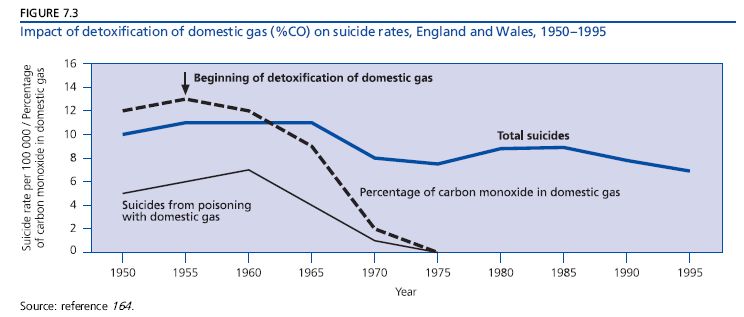
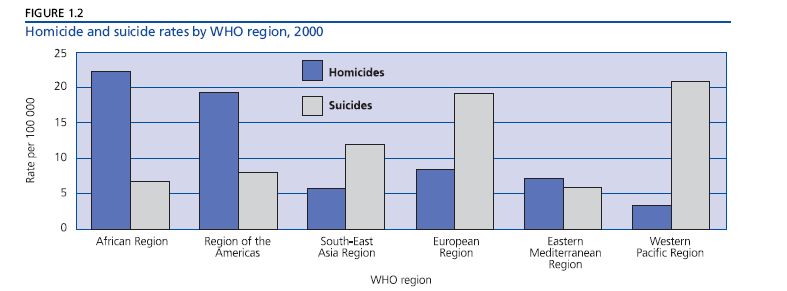
The Bulk of violent deaths are suicides, WHO says
The World Health Organization estimates that, globally, more than 1.6 million people died in violent circumstances in the year 2000.Who says? Oh, WHO. That's in Chapter Seven. Anyway, somebody put me in a straightjacket before I kill myself. The rest of you are on your own. And don't forget, Traffic Deadlier Than Wars, WHO Says
Of that total, 815,000 committed suicide, 520,000 were murdered and 310,000 died in armed conflicts, including terrorist attacks.

Via Instapundit
Edward Wasserman complains,
...it's hard enough to get the story right, without holding it hostage to an open-ended negotiation with zealots who believe they already know what the story is.Guess what? He's not talking about Mikey Moore. Nicholas Stix discusses the AP booing scandal, an example of what Wasserman clearly feels is no problem at all, and Susanna Cornett has a superb response to Wasserman.
Too late
JOHN KIFNER develops the AP report that I mentioned below. He says that
Abdel Rahman al-Rashed, the general manager of the widely watched satellite television station Al Arabiya....like several other commentators, singled out Sheik Yusuf al-Qaradawi, a senior Egyptian cleric living in Qatar who broadcasts an influential program on Al Jazeera television and who has issued a fatwa, or religious ruling, calling for the killing of American and foreign "occupiers" in Iraq, military and civilian.And he mentions several others. It's too late, though. Even if, as I imagine, most Muslims are not in favor of terrorism, and even if they listen to these commentators, the terrorists are too radicalized, and will only stop when they've killed themselves off or grown out of it.
"Let us contemplate the incident of this religious sheik allowing, nay even calling for, the murder of civilians," he wrote. "How can we believe him when he tells us that Islam is the religion of mercy and peace while he is turning it into a religion of blood and slaughter?"
Subscribe to:
Posts (Atom)